

During our backpacking expedition in South West China, I’m always on the lookout for fellow kababayans which we may cross path with on our journey. I know its a sign of missing home a bit but being in a place for days where you only hear foreign languages being spoken, it’s a big relief to hear and see a fellow Pinoys along the way. Unfortunately throughout our 11 days in China, we only caught a couple who we heard spoke in Tagalog. Wasn’t able to took to them though since they quite a distance already. Few weeks after I posted Charming Chengdu, hearing a Pinoy living and working in Chengdu was still a relief even if I’m no longer there. I wanted to know the conditions there right now after the earthquake so I asked John, a Filipino Architect living and working in Chengdu.
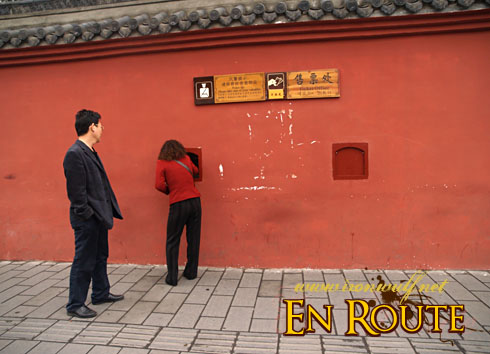
Excerpt from our email:
“the earthquake here last may 12 devastated many outlying towns of Sichuan, but it barely touched Chengdu city. one major reason why so many died in the towns of Beichuan and Wenchuan is because of the shabby construction of their dwellings and public buildings. most of their structures here especially houses don’t have proper steel reinforcements. they do this to save money and because they don’t care for their safety. many people died on the spot because it only took seconds for the houses, schools, and hospitals among others, to collapse; there was basically nothing to hold their structures together to give them enough time to escape. i just arrived from my philippine holiday that day at lunchtime, just an hour before the big quake, and it happened when i was getting ready to report for work. at first i thought i was jetlagged from the three plane rides i took. i live on the 16th floor of a 30-storey apartment building and at 8.0 on the richter scale it suddenly felt like being on a train on a bumpy track for about a minute. i really thought everything was going to collapse when i heard the walls cracking and chipping off in my spare room. but the building held. in the streets below i saw people from everywhere flock in panic in the middle of the intersections. it was the pandemonium i remembered the most.
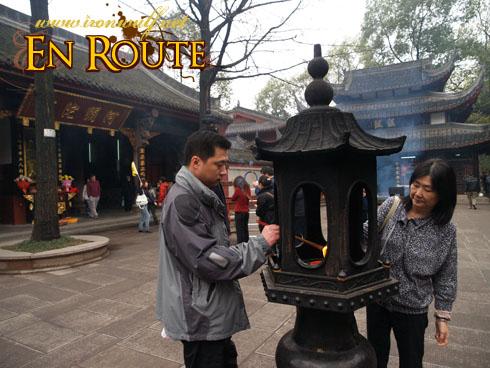
after that day we experienced over two hundred aftershocks in the span of about a month. after a while we just got used to it and it didn’t bother us anymore. the human casualty in this tragedy is around 80,000, but who knows if this figure is really accurate. and the loss to property and business is in the billions of dollars. the chinese government has responded well to this catastrophe, you must have already seen this on tv. one thing that china is good at is the immediate mobilization of hundreds of thousands of rescue and aid workers, something that is almost impossible in a non-communist country. china’s proper and transparent handling of the situation has given it a lot of “face” and has helped ease world pressure on areas in which it has miserably failed (e.g. on Darfur and Tibet).
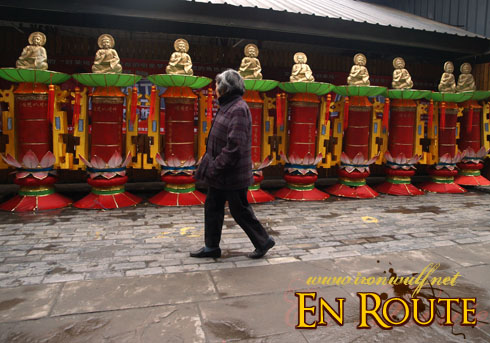
it’s almost back to normal around here. rebuilding in the affected areas has started and is progressing well. there is money to spare because the red cross here has received tens of billions of dollars from concerned chinese and foreigners around the world. the people have come to accept the loss and are starting to move on with their lives with assistance from the government. for us filipinos working here, it’s just another chapter in our lives as ofw’s, one we’ve long accepted as part of the risk we’re taking when working abroad. one thing for sure, because of this horrible experience i will never forget this place.”
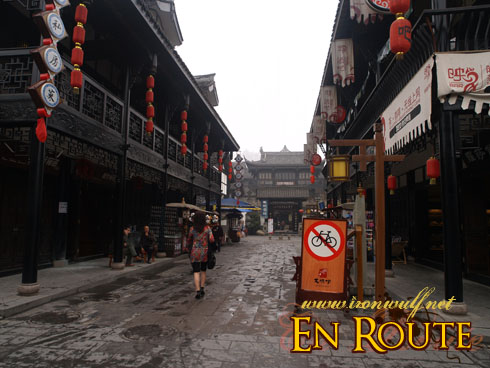
There are around 400 Filipinos in Chengdu, China and John is one of those overseas workers living there. His wife is in Iloilo which likewise has been struck by a major calamity caused by Typhoon Frank, which also needs some attention. You can read more about his personal and post-mortem account of the China Earthquake at his blog.
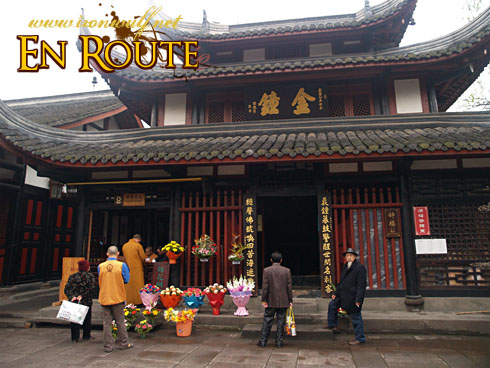
I’m really glad to know that somehow technology can bridge boundaries to our fellow Kababayans. And it feels good to know that Chengdu wasn’t hit that much since it’s one of the cities I really enjoyed even on a brief stay. Although i am sad to know that Dujiangyan, another place we visited was one of those majorly affected by the quake.
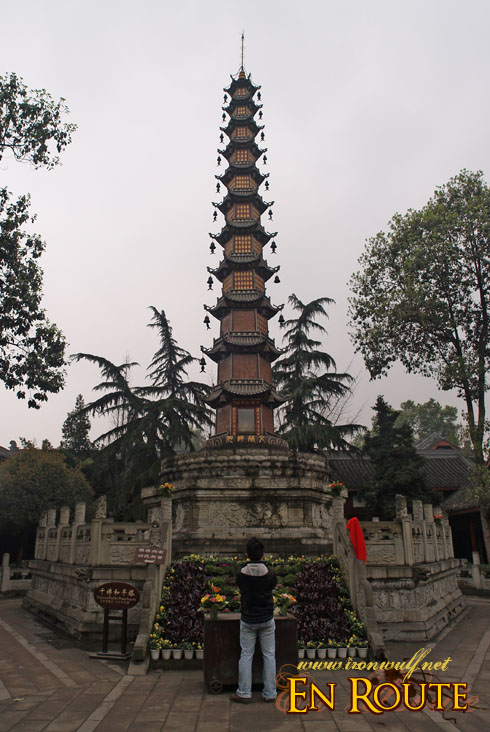
Calamities and devastation have been hitting all over the places and have been claiming hundreds of thousands of lives already. On the local front, we are still dealing with the overturned boat at Sibuyan Sea in Romblon and the flash floods causing major damage to the lives of the people in Iloilo. Unlike China though, our government isn’t as fast in responding to situations like this. For us fortunate ones, we can only offer prayers or give certain amounts of donations to charities or groups of our choice which are also helping alleviate this condition.


ferdz, astig yung Yuan Gong Suo Street. buti na lang at may nakilala din kayong mga pinoy dyan. marami na rin pala sila sa china. ganda ng peace pagoda. buti na lang hindi nasisira sa bagyo at lindol yan.
for now, the best we can do is really to pray for the affected areas and extend help if we can.
That was an interesting comment by your friend John that the rapid response was due to the country being communist. I don’t necessarily agree with that comment because 9/11 response was pretty rapid also. Myanmar response is very slow. They’re not communist, but they’re similar to communists since they’re a military regime and not democratic.
I’m not surprised that shoddy construction is what caused most of the deaths. We haven’t heard any prosecutions of those builders though. Perhaps the Chinese gov’t is looking the other way because gov’t officials may be involved.
it’s always nice to hear from fellow kababayans, especially knowing they’re safe and spared from harm.
also nice for john to reach out across the distance to give a voice to pinoys over there so we’d know how they are.
thanks john, for sharing your story, and thanks ferdz, for giving it the space and sharing the images of chengdu.
Your pictures had brought so much awe to me….you brings the world to every person who’ll view your blog that our world is still a beautiful place to live in…
I love the first picture because it symbolizes China,booming to a world class industrialized country….sana ganyan narin ang Philippines soon…..
nice structures!
how nice to read a recount of events by a fellow Pinoy who’s closest to where the tragedy happened. i was struck by his mention of “shabby construction of dwellings” as one reason why many people died. images of poorly constructed houses and buildings in manila flashed in my mind. and then i remember the earthquake prophecy. man, i really hope and pray we don’t experience that earthquake here.
The photo on the town square is amazing. The gold engraves on the base looks Islamic to me
THe night shot is quite impressive
wow. nice photos. sweet. glad the earthquakes are away now.
Hey Dom, it’s agood thing Chengdu wasn’t hit that hard and maganda pagkagawa ng structures dun. I only met john through correspondence, but I’m sue it would be great if we actually met a Filipino like him there.
Hi Wil, you are right that not only in communist countries are capable of a fast response. Though in China’s case they are just really capable, having plenty of resources and technologies to handle the situation easily.
Oggie, I thought that it would be better we get a different perspective and experience from a fellow kababayan on this matter. And John, as I noticed also has a literary gift.
Many thanks for the kind words Eric. That Tia Fu plaza is a real wonder of sights and sounds.
Thanks Acey.
Barrycade. I do hope that prophecy doesn’t happen here.
I love that plaza as well BW, will post more details of that later.
Thanks Prinsesa Musang. Am glad the earthquakes are gone as well.
Hi Ferdz, it’s a strange feeling reading my words in this episode of yours. Not that i never expose myself in my own blogs, but it almost feels like being naked in another person’s house (haha).
Anyway, I’m glad to share my recollections on the Sichuan quake. Surviving a major earthquake twice in my life makes the telling more vivid. I experienced a similar one in Iloilo City in 1990 that epicentered in Baguio City. Back then, I watched the buildings in my university (San Agustin) sway and sustain damage while I was outside, at ground level. This time though I was inside a high-rise apartment while people at ground level watched my building sway and sustain damage and were probably waiting to see it collapse.
I forgot to mention that after the major quake and after every succeeding aftershock that lasted for weeks, all high-rise apartments were off limits to anyone except authorities who’d inspect the buildings for damage. Their safety checks would sometimes take all night and unless they give the go signal for us to reoccupy the buildings, we had to sleep out in the streets or in evacuation centers.
As for WIL’s comment on mobilization of manpower, I totally agree that many countries can respond with the same speed, efficiency and determination in the face of disaster as China. The only difference is that with China’s massive proletariat population commoner volunteerism without regard for personal safety is very high. And the numbers are just staggering. A common objective like a disaster or an enemy is like glue that binds them almost immediately making coordinated action easier. This phenomenon is everywhere not just in disasters. I see it even in construction sites I have visited in my rounds as an architect. On a relatively small building you see as many as a thousand workers, half of which are doing their work while the other half just stand there doing nothing. But they get their work done in record time. I see a lot of loopholes in this strange behavior (quality is one of them) but this is probably how China, with its inexhaustible ever-willing cheap labor, has achieved tremendous growth in such a short time.
I appreciate all the other comments, rest assured that everything here is back to normal. Thank you also Ferdz for mentioning the Iloilo Flood which has affected so many of my “kasimanwa”, that’s another disaster story I have to tell some other day…
John
Chengdu, Sichuan China
jctiampong@yahoo.com
http://johncarlotiampong.blogs.friendster.com/my_blog/
napunta ka na naman sa Chinatown there? lots of foreign trips a…ako tagal pa uli before I fly. kailangan mag-tipid sa dami ng bayarin
wow astig
sana makapunta din ako ng china someday.. hehehe
sarap naman mamasyal
Hi! Your China travel blogs have inspired us to go to China especially Emeishan and Leshan. Any info on how you were able to arrange your travel will be much appreciated. We tried contacting some local tour providers and it seems that they can only provide the “usual” China tours.
Parang may optical illusion created when I scrolled down the Pagoda photo. Nakakatuwa. HEhehe.
[...] the recent major earthquake in China, one of the cities that was majorly affected was Dujiangyan City since it was close to the [...]
Hi,
I’m a Filipno working for an international philantrophy organization (www.winrock.org), and was recently temporarily posted in Chengdu China (about a year). I am wondering if John, named in your entries, is still in Chengdu,. and if you can share to me his contact information.
Thanks,
Jim