
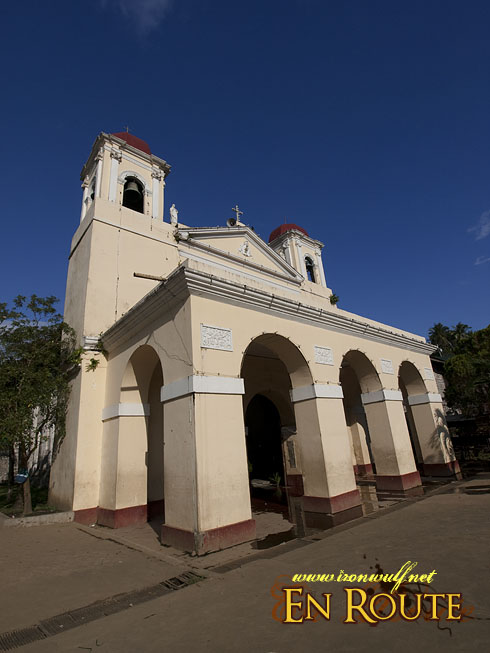
The Shrine of our Lady of Caysasay
Aside from the Taal Basilica found at the heart of Taal Town, there is another church worth a visit nearby barrio Labac (also known as Caysasay). From Villavicencio House, we followed the ancient steps called Hagdan-hagdanan built by Father Celestino Mayordomo that led us to a smaller but charming butter-colored walls of Our Lady of Caysasay Shrine. Petite but full of character, the church was was built on the foundation of miracle by the image of Our Lady of Caysasay.
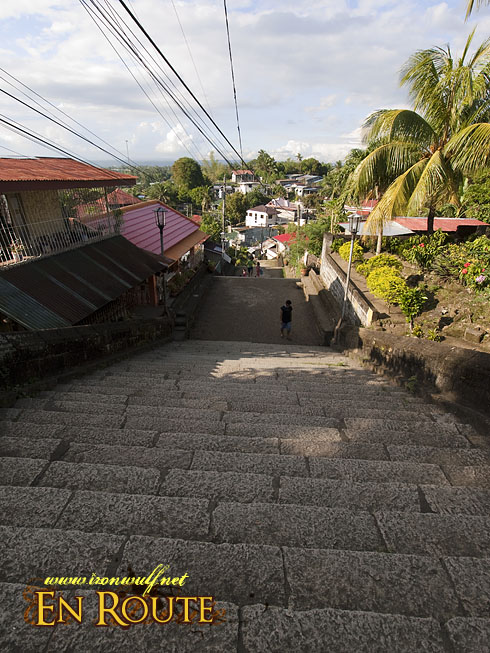
Hagdan-hagdanan steps to Caysasay
Delving briefly on history here, in 1603, a pious fisherman by the name of Juan Matingkad was fishing in Pansipit River in Taal, Batangas. Captured in his net along with the fishes is a twelve inch image of Our Lady Of Caysasay. He brought it back in town and showed his discovery to the authorities. Even the Vicar who represented the King of Spain visited Juan’s home to investigate.
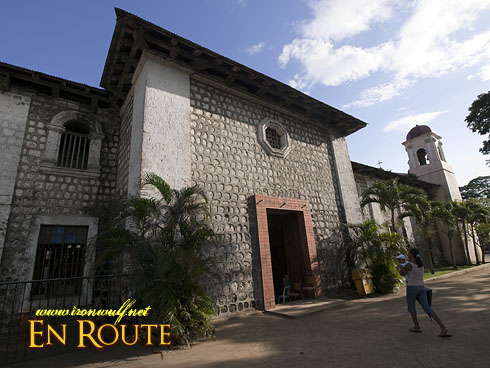
Shrine side entrance
The image was then handed to Doña Maria, the town judge’s widow, for safekeeping on a specially made urn. That’s when things out of the ordinary events started to happen. Several times, the image would disappear from the urn and would return the next morning. The priest asked a few volunteers to keep watch beside the urn. While in prayer, the volunteers did see the urn open by itself and the Lady of Caysasay going out and in to the urn again.
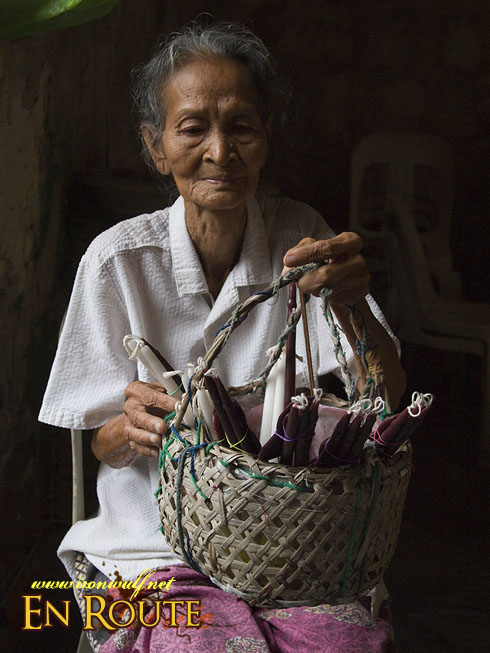
A Candle Vendor welcomes Caysasay Shrine visitors
The priest and the townsfolk was ready the next time this happened. They lit candles and decided to follow the Our Lady of Caysasay only to find themselves back to where the image was found. After this, the image of the virgin was moved to the church for safekeeping but the disappearing and appearing continued until the lady vanished for a time.

The elegant interiors and altar of the Shrine of Caysasay
It was in 1611 when the image was once again spotted by a couple of wood gatherers, Maria Bagohin and Maria Talain, on the place where the image was originally found. The lady wood gatherers spotted the image of the lady reflecting on a spring water. Lifting their heads up, they found the image of Our Lady of Caysasay on top of a sampaga tree along with lighted candles guarded by a Kingfisher which are locally called Casaycasay. The Spaniards had a hard time pronouncing this bird’s name and ending up sounding like Caysasay.
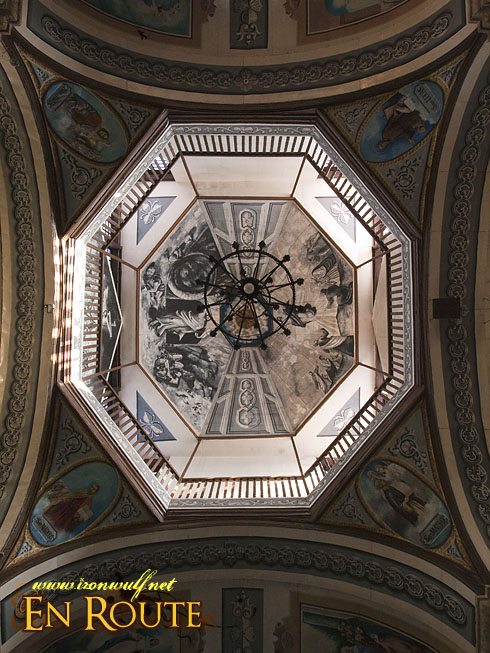
Beautiful paintings by Cesar Aberoni
The ladies reported this immediately to the parish priest. It was then decided that Our Lady of Caysasay chose to stay on this spot and a shrine was built there. It was also on the same year when Juana Tangui, an almost-blind servant girl, as well as 30 other women saw the apparition of Our Lady of Caysasay. The almost-blind Juana restored her vision after the apparition and the other sightings were investigated. This was officially the first recorded apparition in the Philippines. It was in 1620 when a small chapel was made of corals was built on the spot. The well and the stream waters near the spot was said to be miraculous and the townfolks now calls the place “Banal na Pook”, also commonly known as the Miraculous Wells of Sta Lucia. The whole chappel is no longer there as it was destroyed by the Taal eruption in 1754. Only the arch with the bas relief of Our Lady of Caysasay remains.
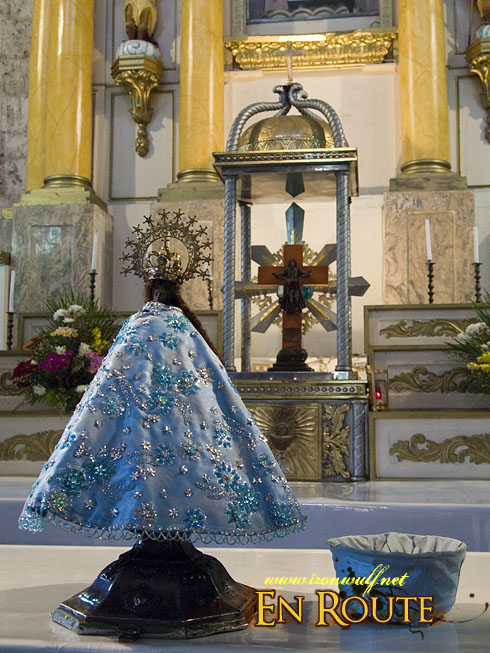
The garbed image of Our Lady of Caysasay
Caysasay Shrine and the nearby well is truly rich in history and phenomenon. The miraculous stream where the Lady of Caysasay reflected still flows at the Shrine of Caysasay entrance until this time. The shrine had gone through some major renovations as well. The original chapel built on 1611 was only made with basic materials. It was in 1639 when Father Alonso Rodriguez built a stone church on the spot.
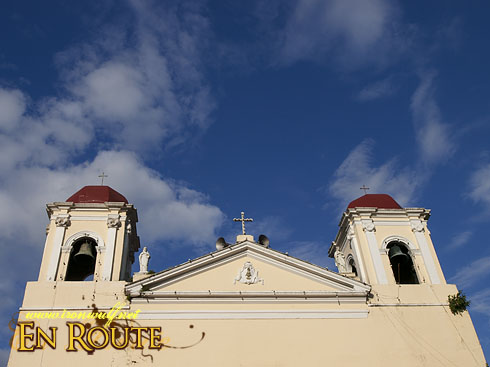
The roof, towers and cross of Caysasay Shrine
In 1754, Taal Volcano erupted damaging the church roof, rebuilt again but an earthquake made the walls and towers fall in an earthquake in 1852. Reconstructed in 1856 but slightly damaged again by an earthquake. It was at that time Father Marcos Anton renovated the interiors and the beautiful paintings added by Cesar Aberoni. The townfolks still continue the tradition of moving the image of the Vigin of Our Lady of Caysasay from its special place in Taal Basilica to the Shrine of Caysasay every Thursday and returned on Saturdays.
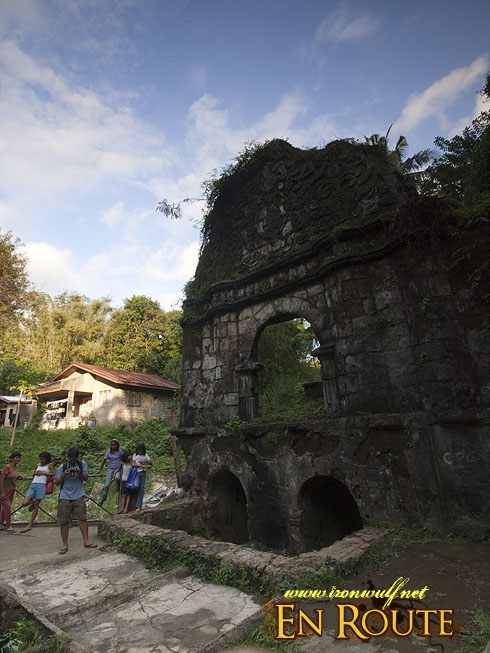
The miraculous twin well and arch of Sta Lucia
It’s really worth exploring these places in Taal not only for the structures but its rich history. The only thing I’m bothered is how dirty and un-maintained these places are now. The stream near the Sta Lucia Wells are filled with trash that no matter how miraculous its water sounds, the only thought I have is water contamination from the dirty stream and surroundings. I hope the Taal people could clean up the place and make it more presentable for people.
—
Join the Backpack Photography Workshops in Banaue, Batanes and Palawan!


Ferdz Decena is an award-winning travel photographer, writer and blogger. His works has found print in publications such as Singapore Airlines’s Silver Kris, Philippine Airlines’ Mabuhay, Cebu Pacific’s Smile and Seair InFlight. He has also lent his expertise to various organizations like the Oceana Philippines, Lopez Group Foundation, Save the Children and World Vision, contributing quality images for their marketing materials.