
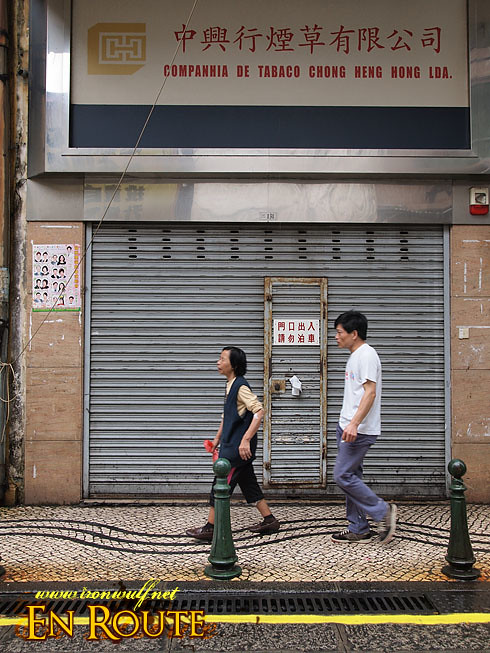
Locals walking the Cobblestoned Streets of Macau
It was like a maze if I may say so. Or we were just moving too fast while navigating the inner streets of the old neighborhood of Macau that my sense of direction got lost in the wind. “We better hurry. We got a schedule to keep” reminded Joao, our guide. I couldn’t even remember half of what he told us during our walk. But one things definitely sure, I love walking these streets. It reminds me of Manila, or what it could have been if it wasn’t bombed to the ground.
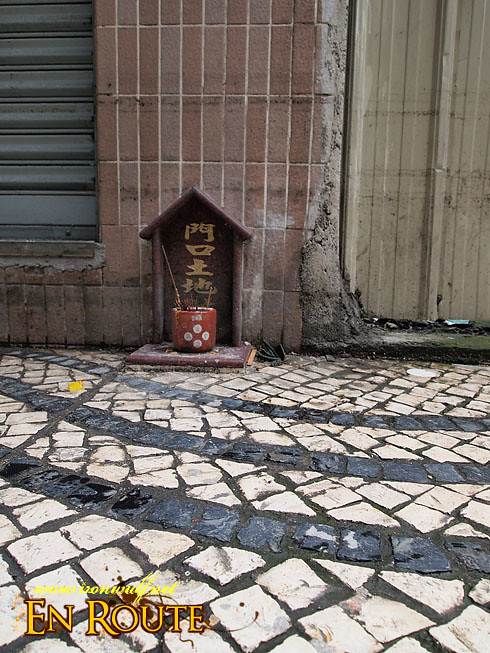
The Small Street side Chinese Shrine
I was clicking away with my Olympus E-PL1, capturing as much detail as I can, ever since we started our walk from Ponte 16 and on to Avenida de Almeida Rideiro, the spine of Macau where the other streets branch out like blood vessels. The soles of my feet got a kick walking on the marble-white cobblestone sidewalk adorned with a flow of curving lines and alternating pattern of mammals like lizards and dolphins and more.
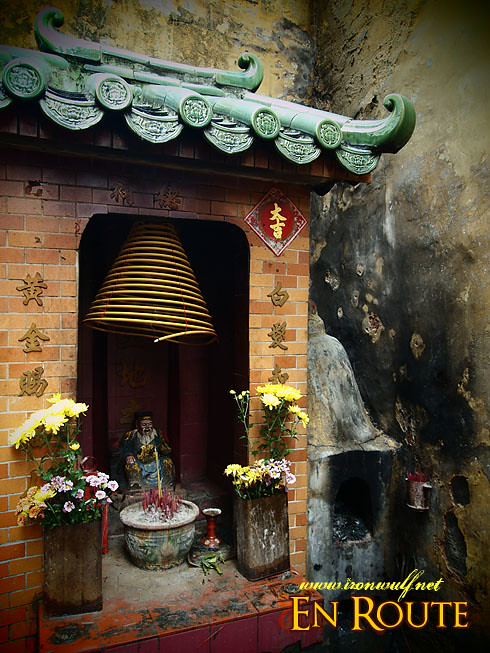
The large Village Shrine
We made an abrupt left turn passing by Centro De Saude and entering the alley of Rua De Cinco De Outburo. The convergence of Chinese and Portuguese influences is evident on these old streets of Macau. Among the stained walls, peeling paints of the facades are streets signs written in both Portuguese and Chinese.
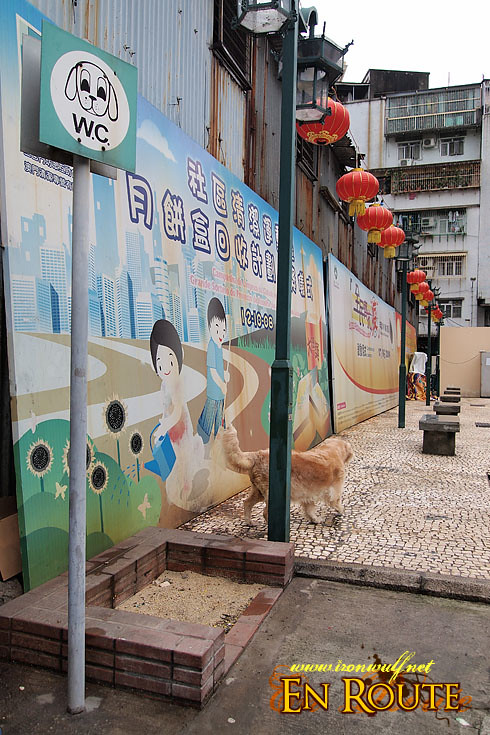
Macau Old Town Dog Park
With the Portuguese influenced store shop architectures are several Chinese shrines. Small ones are for the streets and there are larger shrines for the villages. Each of the shrines have deity names believe to protect the areas from problems like property disputes. These shrines scattered around town are always tended to and always have incense burning.
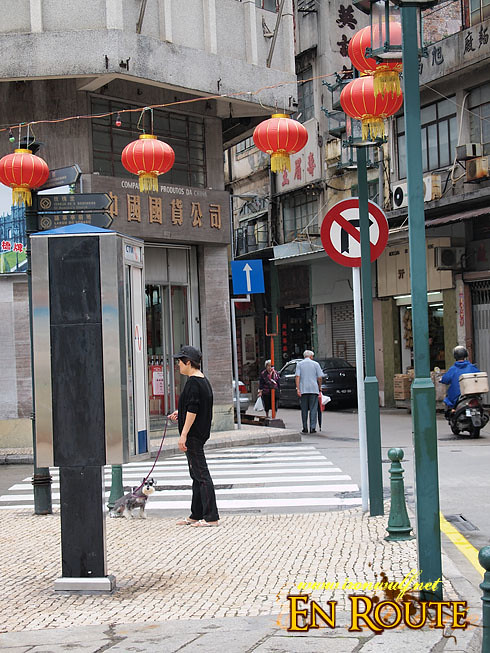
Dog Park Street Corner
One thing that made me smile is finding a park dedicated to dogs. Just across Hong Kung Temple is a small square where dog owners can freely unleash their dogs and let them roam around. Dogs are housebroken and trained here that they can poo and pee at the designated restroom area. I was expecting a foul smell but surprised that there was none. Joao told us that the place is regularly cleaned.
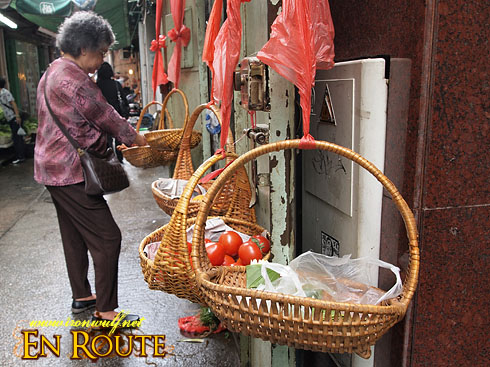
Fruits and Vegetable Baskets at Rua Dos Mercadores
Making another turn from the alley beside the temple, we passed by Rua Dos Mercadores also known as the “Streets of Markets”. From the North, South, East and West, there are large assortments of products to buy with businesses usually ran by a family living or owned those on decades old buildings, from fruits, medicinal herbal teas, cookies and fireworks to mention a few.
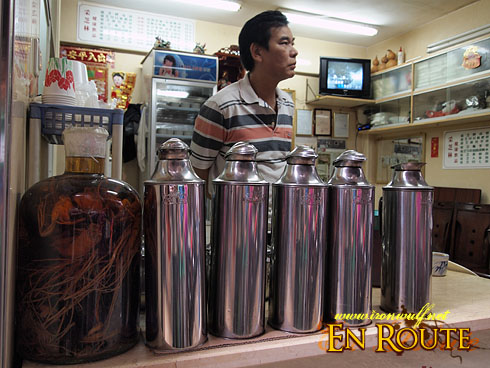
Care for some herbal tea?
I was still playing catch up to the group when we reached the center of Rua Dos Mercadores. Facing each wall of that large street is a line of motorcycles which is probably the most common transportation in Macau. It’s small that can easily fit along narrow alleys, cheaper than cars and saves cost on gasoline.
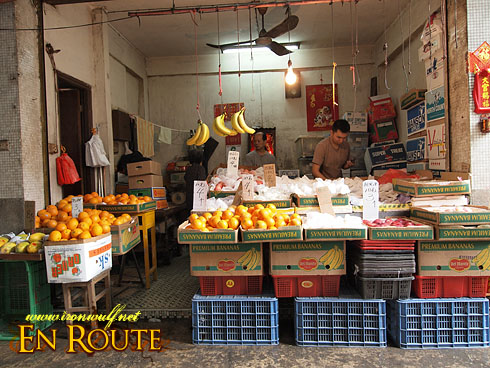
A fruit shop
The stretch of that whole walks was surprisingly only a little over 20 minutes. That’s what I would call shoot and run. I would walk that route again on a slower pace if have the chance to come back. Whoever said that Macau is all casinos are missing out on the old town heritage which will appeal to tourist aiming to do some sightseeing. Soon we finally emerged from an alley leading to Macau’s Historic Center.
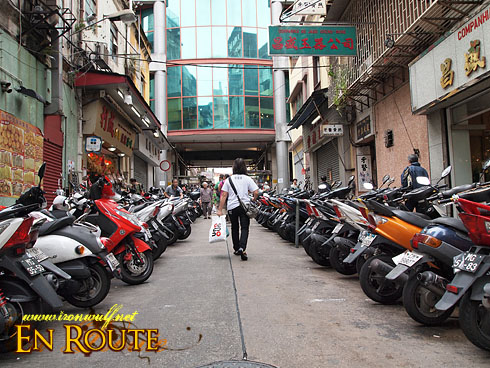
Motorcycle Alley Parking


Ferdz Decena is an award-winning travel photographer, writer and blogger. His works has found print in publications such as Singapore Airlines’s Silver Kris, Philippine Airlines’ Mabuhay, Cebu Pacific’s Smile and Seair InFlight. He has also lent his expertise to various organizations like the Oceana Philippines, Lopez Group Foundation, Save the Children and World Vision, contributing quality images for their marketing materials.